+8613963751807
External Floating Roof Tanks for Crude Oil & Refined Oil Storage
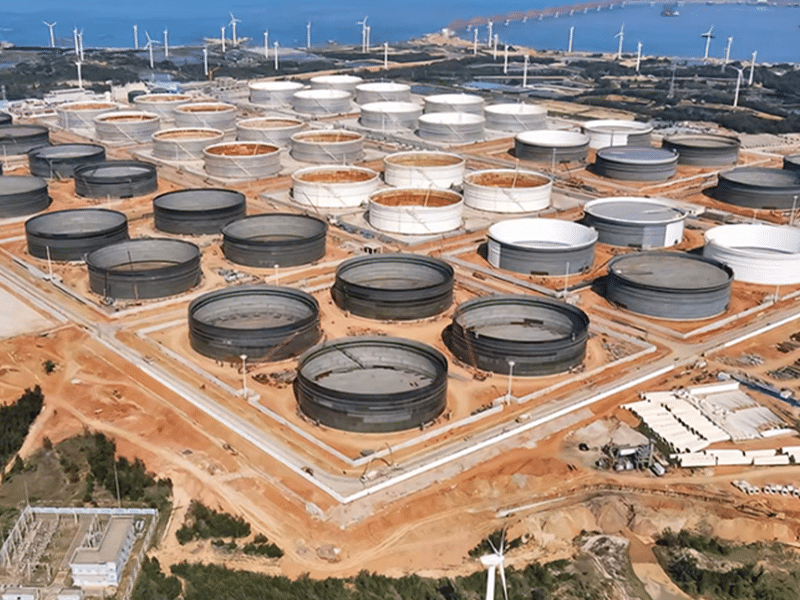
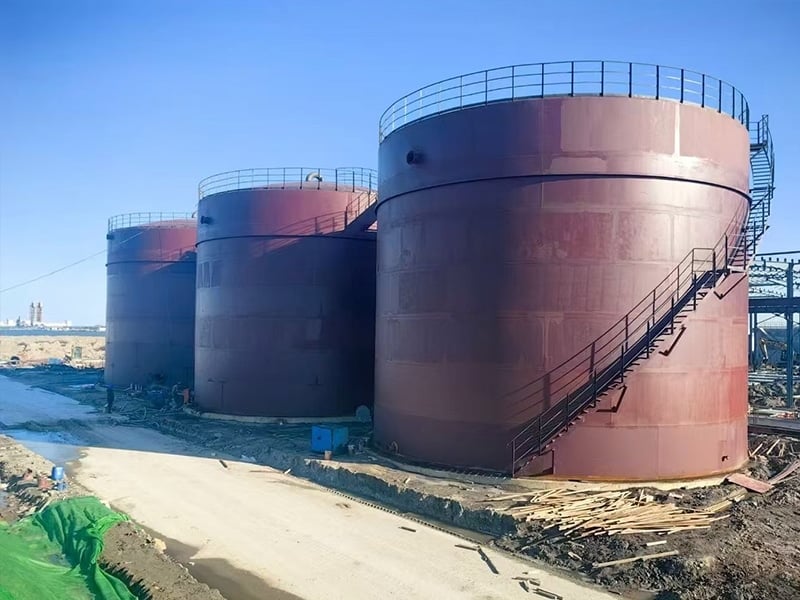
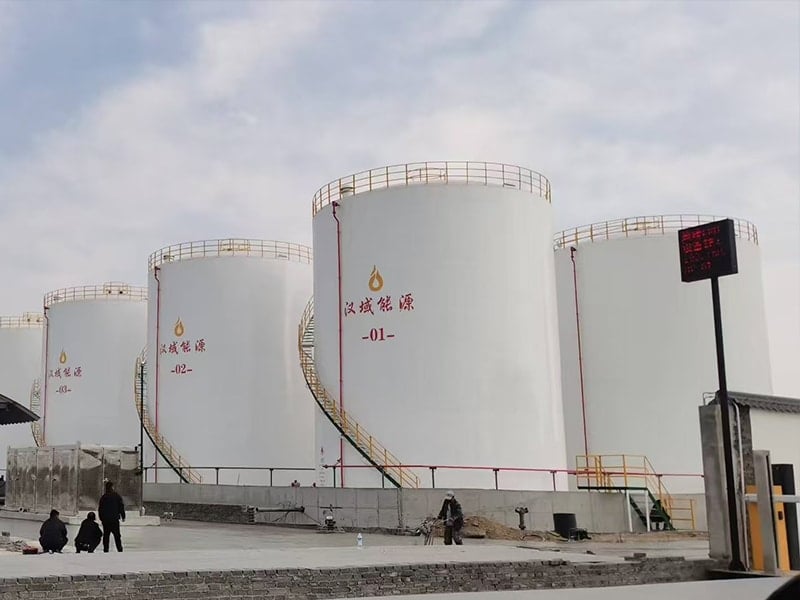
External Floating Roof Tanks for Crude Oil & Refined Oil Storage
Source manufacturer external floating roof tanks, custom design, fabrication & installation, multi-standard compliant, multi-material options, anti-volatilization & low loss, ideal for large-scale petroleum storage.
…
Get Best Price
Don’t see what you’re looking for? Let us help you. Give us a WhatsApp or send us a message.You can contact us by:
As a source manufacturer of External Floating Roof Tanks, our company specializes in custom design, professional fabrication, on-site installation and full-process engineering supporting services.
Leveraging independent production cost advantages, strict quality control and rich engineering experience, we provide highly adaptable, safe, compliant, durable and efficient External Floating Roof Tanks and integrated solutions for global petrochemical customers.
With years of industry deep cultivation, we control the whole process independently—from raw material procurement, core component fabrication to finished product installation and commissioning. Eliminating intermediate links ensures product quality stability and cost-effective customized services.
Our External Floating Roof Tanks highlight core advantages of large capacity, anti-volatilization and low loss, widely used in various large-scale petroleum storage scenarios.
Implementation Standards
Our External Floating Roof Tanks strictly follow dual domestic and international core standards, ensuring full compliance in design, fabrication, installation and inspection.
International Standards
- Core standard: API 650 “Welded Tanks for Oil Storage” (regulates floating roof structure, welding process, non-destructive testing and pressure test).
- Welding qualification: Complies with ASME Section IX (welding procedure qualification and welder assessment).
- Customizable adaptation: API 620 standard for large-scale low-pressure storage conditions.
Domestic Standards
- Strictly implements GB 150-2011 “Pressure Vessels” and GB 50341-2014 “Code for Design of Vertical Cylindrical Steel Welded Oil Tanks”.
- Optimizes details based on domestic site conditions, medium characteristics and installation requirements, achieving unity of customization and standardization.
Applicable Storage Media
Combined with anti-volatilization and large-capacity advantages, our tanks are precisely adapted to petroleum and its derivatives:
- Crude oil (density 0.80~0.95g/cm³, with sulfur, wax, colloid; slightly corrosive). Customizable heating and insulation structures for 0℃~80℃ storage.
- High-viscosity refined oils (heavy fuel oil, diesel oil). Customizable mixing and discharging auxiliary structures to improve efficiency.
- Petroleum derivatives (naphtha, lubricating oil base oil).
- High-sulfur/highly corrosive media: Custom anti-corrosion materials and protective structures to avoid tank corrosion.
Process & Operation Parameters
We adhere to “standardized foundation + customized adaptation” principle:
- Design pressure: -0.5kPa~+2.0kPa (gauge pressure, compliant with API 650). Customizable to 17.2kPa (2.5psi) for special low-pressure conditions.
- Design temperature: -30℃~150℃. Customizable low-temperature toughness materials or insulation systems for extreme environments.
- Operation modes: Static storage (default). Customizable continuous feeding-intermittent discharging or circular storage.
- Safety configuration: Equipped with standardized process interfaces (feeding, discharging, level/temperature monitoring, pressure regulation), breathing valves, emergency relief valves, lightning/anti-static devices, level alarm systems and fire-fighting facilities. Customizable based on project safety level.
- Quality inspection: All tanks pass appearance inspection, dimensional accuracy check, non-destructive welding testing (RT/UT/MT/PT), hydrostatic test and air tightness test before delivery.
Main Material Selection
We provide precise material customization based on medium characteristics, working conditions, site environment and budget, focusing on three key components:
Tank Wall (Core Pressure-Bearing Component)
- Q235B carbon steel (equivalent to ASTM A36): Yield strength ≥235MPa, tensile strength 370~500MPa. Excellent weldability and cost-effectiveness. Suitable for conventional atmospheric pressure, non-corrosive/slightly corrosive media.
- Q345R carbon steel (formerly 16MnR, equivalent to ASTM A516 Gr.70): Yield strength ≥345MPa. Better low-temperature toughness and structural strength. Suitable for medium/large tanks (volume >10,000m³), low-temperature environments or trace corrosive media.
- 304 stainless steel (06Cr19Ni10, equivalent to ASTM A240 TP304): Cr content ≥18%, Ni content 8%~11%. Strong corrosion resistance. Suitable for high-sulfur/highly corrosive media, high-purity media or coastal high-salt fog environments.
Tank Bottom
- Synchronously adapted to tank wall materials for structural compatibility.
- Q235B: For conventional dry foundations and small/medium tanks (matched with anti-corrosion coatings).
- Q345R: For large tanks, soft soil foundations or easy settlement scenarios (improves deformation and settlement resistance).
- 304 stainless steel: For wet corrosive foundations or highly corrosive media (eliminates corrosion and leakage risks).
Head (Sealing & Pressure-Bearing Auxiliary Component)
- Same material as tank wall to ensure welding compatibility.
- Q235B/Q345R: For conventional working conditions.
- 304 stainless steel: Upgraded for strong corrosion conditions (equipped with anti-corrosion sealing structures).
Core Advantages
- Source production: Independent control of the whole process, no intermediate links. Ensures quality and cost advantages.
- Full-dimensional customization: Provides tailored services for structure, parameters, materials, supporting facilities and on-site installation.
- Professional engineering support: One-stop service from design to commissioning. Professional installation team follows up the whole process.
Application Scenarios
Our External Floating Roof Tanks are widely used in large-scale petroleum storage and petrochemical fields:
- Large refineries: Centralized storage of crude oil and semi-finished oil (adapts to continuous refining production needs).
- Large oil depots: Transit and reserve of refined oil and crude oil (especially suitable for highly volatile media like gasoline and aviation kerosene).
- Port oil storage bases: Reception, transit and storage of marine petroleum (customizable to port site conditions).
- Oil and gas treatment centers: Storage of treated crude oil and natural gas condensate (optimized design based on medium characteristics).
- Chemical parks and large energy enterprises: Large-capacity safe storage of petroleum derivatives.
As a trusted partner for global customers, we adhere to standard compliance and quality supremacy. Relying on source production strength, full-process customization capability and professional services, we provide safe, efficient and durable External Floating Roof Tanks and one-stop engineering solutions—helping customers reduce volatilization loss and operation and maintenance costs.
0
PROYECTOS DE TANQUES FINALIZADOS
0
Experiencia en fabricación
0
PIES CUADRADOS DE ESPACIO DE FABRICACIÓN
0
EMPLEADOS PROPIETARIOS
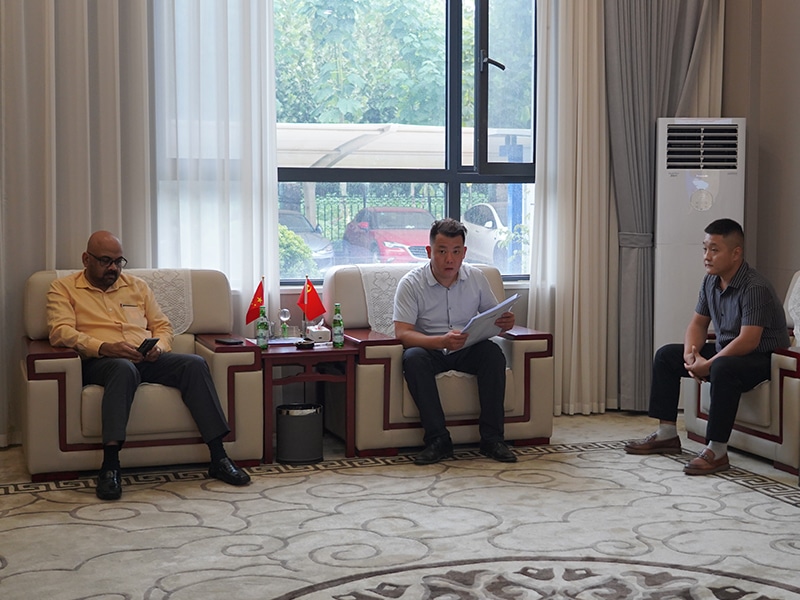
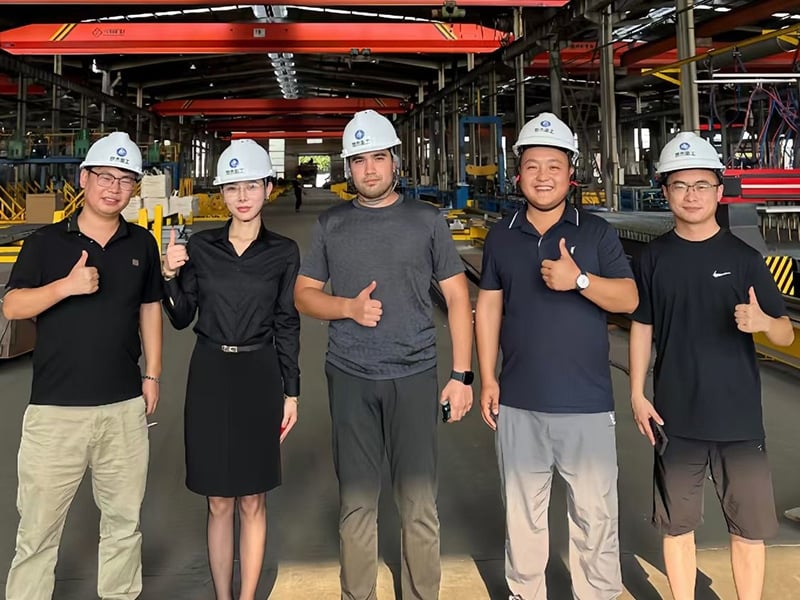
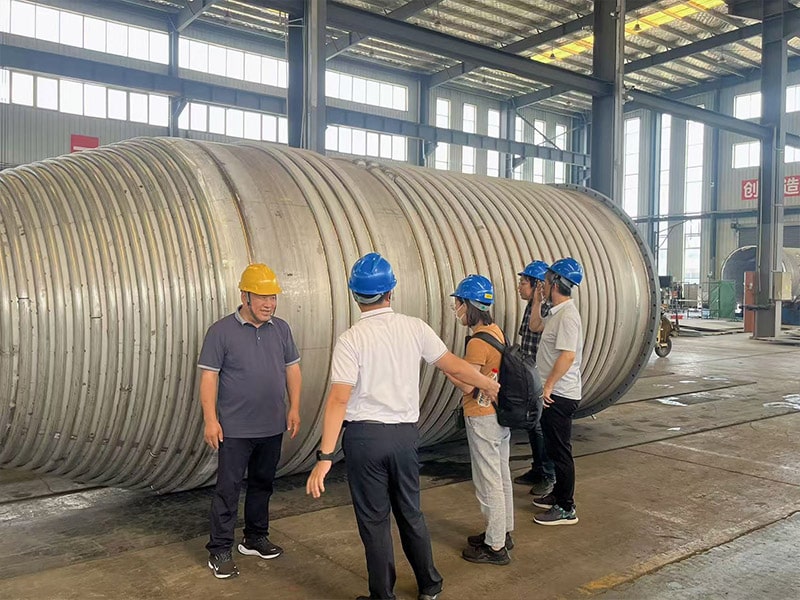
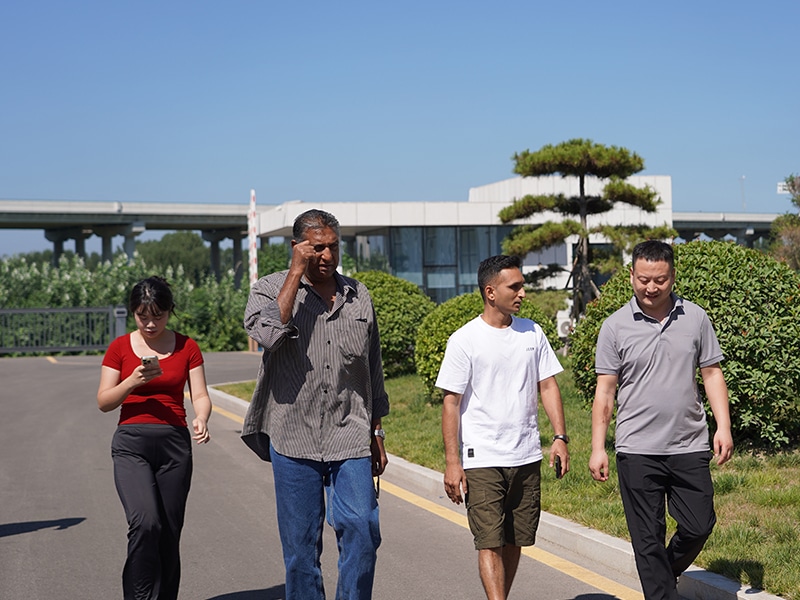
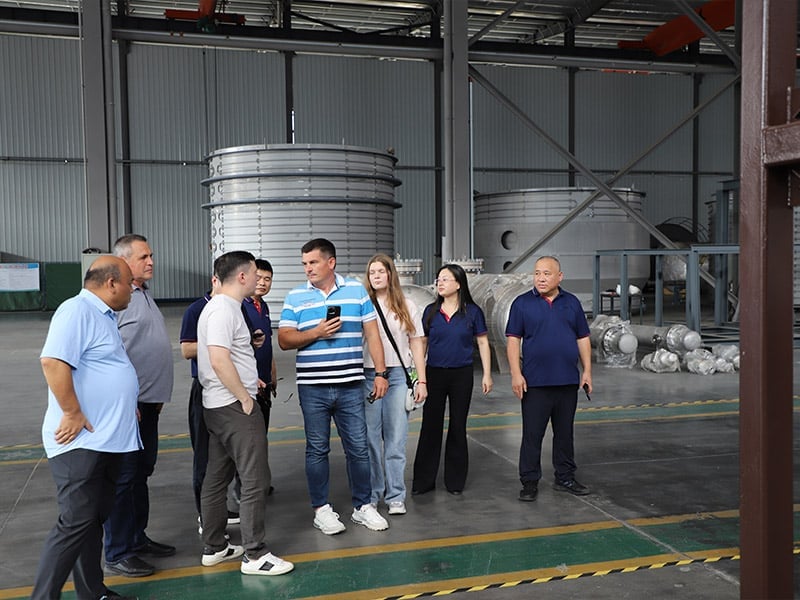
Shandong Shijie amplía activamente sus mercados nacionales e internacionales, estableciendo asociaciones estratégicas a largo plazo con empresas de renombre como PetroChina, Sinopec, Huaneng y Geely. Sus proyectos de ingeniería abarcan más de 300 ciudades en 23 provincias de China, y sus operaciones internacionales de ingeniería han llegado a casi 30 países y regiones de Oriente Medio, Asia Central, Sudeste Asiático, Europa y América, recibiendo elogios generalizados de comerciantes nacionales y extranjeros. En el futuro, la gente de Shijie dará una calurosa bienvenida a los comerciantes nacionales y extranjeros para crear brillantes carreras juntos.


¿Tiene alguna pregunta?
Estaremos encantados de responder a cualquiera de sus preguntas relacionadas con nuestro inventario, nuestras ubicaciones o nuestra forma de hacer negocios.
¿Busca un presupuesto?
Le recomendamos que envíe un documento de solicitud de presupuesto a través de nuestro formulario RFQ.
Solicite presupuesto para su próximo proyecto de tanque de almacenamiento sobre tierra.