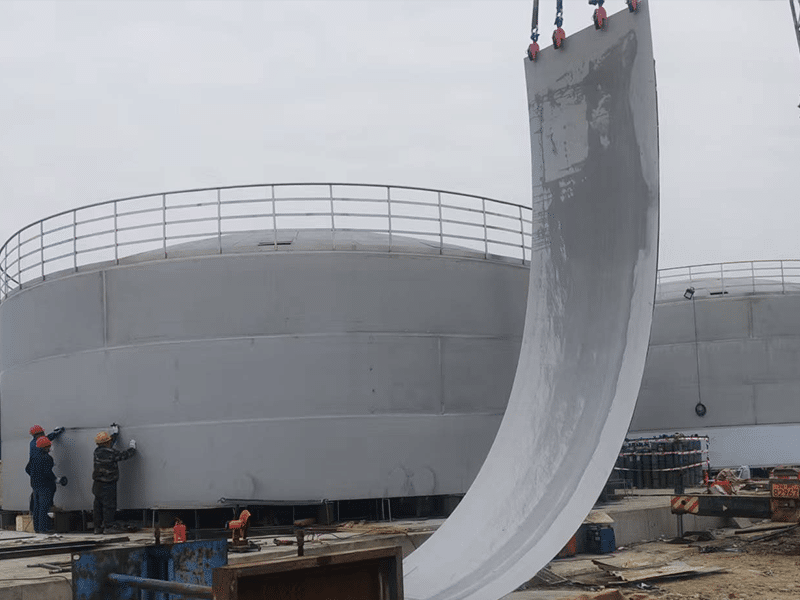
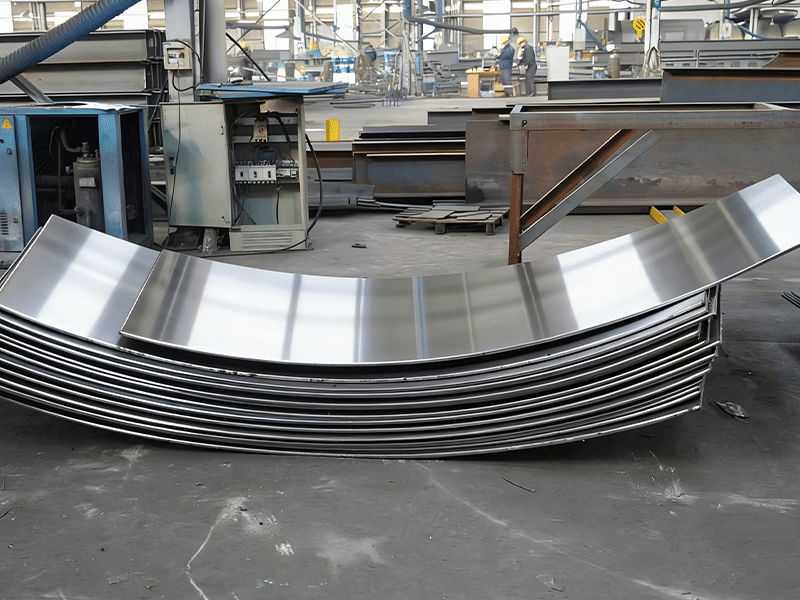
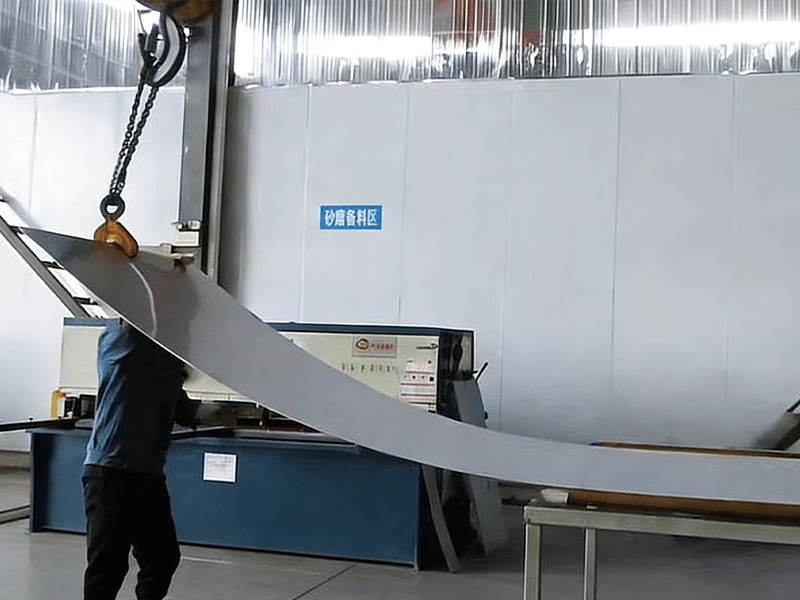
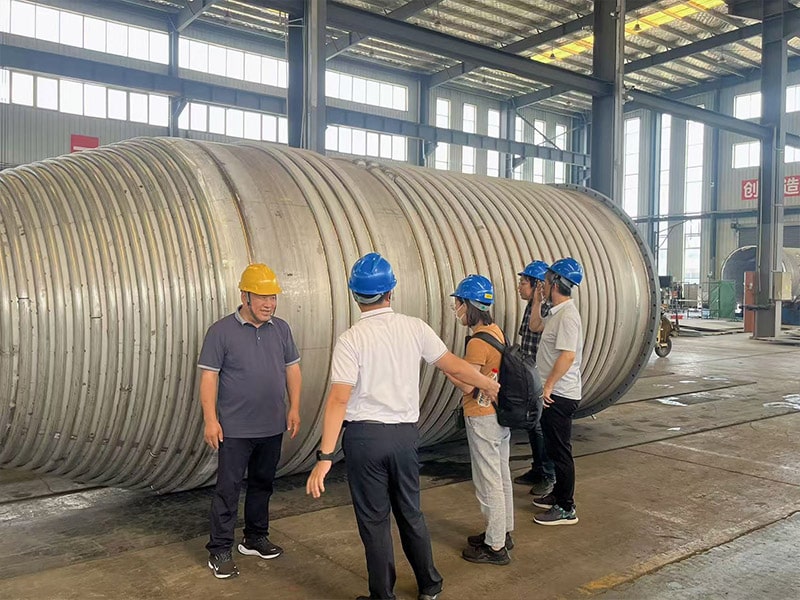
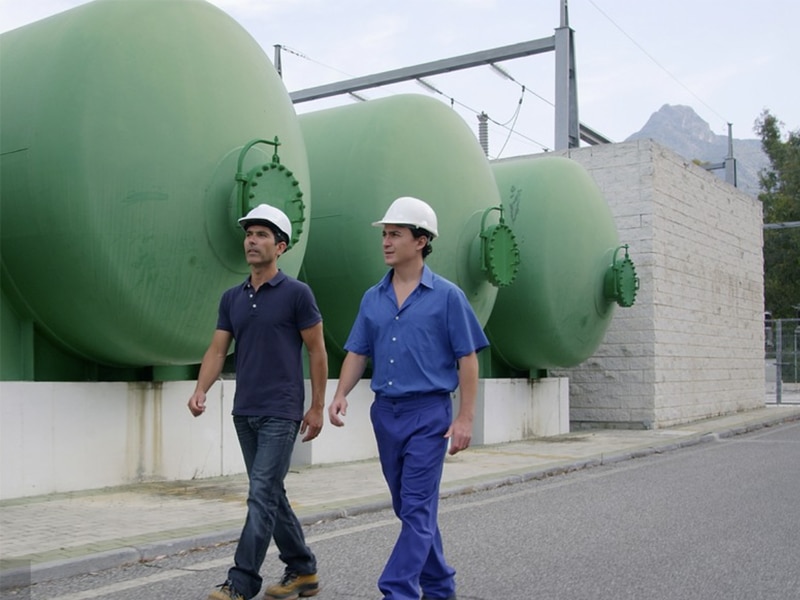
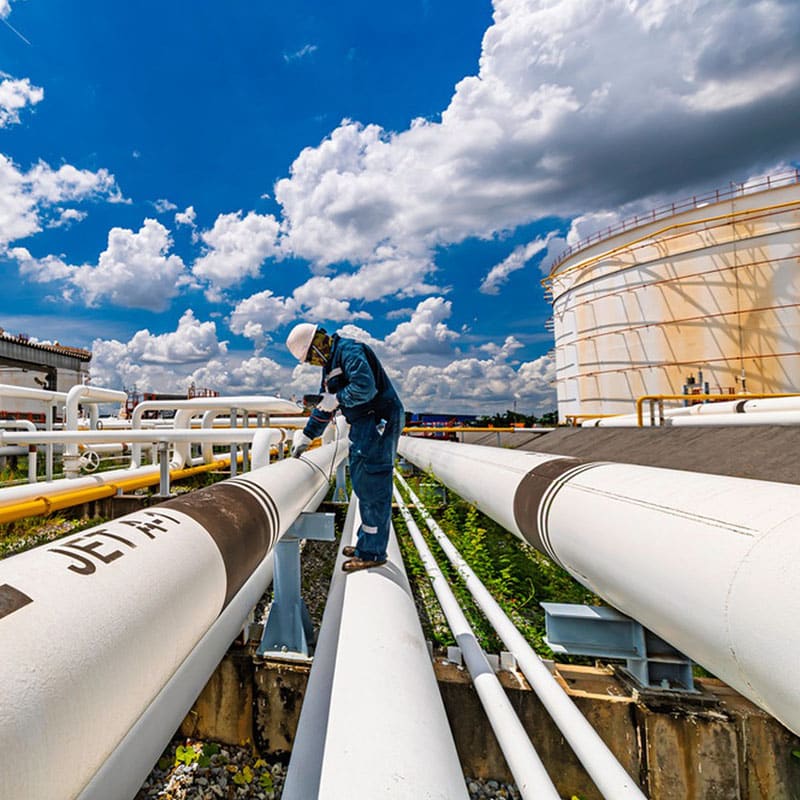
Storage tanks manufactured from stainless steel clad plate feature an inner layer of stainless steel and an outer shell made of various grades of carbon steel or low-alloy steel. Clad tanks combine the corrosion resistance of stainless steel with the excellent mechanical properties and cost-effectiveness of carbon steel. Stainless steel clad plate offers a favorable performance-to-price ratio, with a cost approximately 75% of that of 304 stainless steel and about 60% of that of 316L stainless steel. The manufacturing process of stainless steel clad plate storage tanks involves steps such as material cutting, edge preparation, forming, and welding, similar to that of ordinary carbon steel tanks. The key difference lies in the welding process, where the carbon steel base layer and the stainless steel cladding layer require corresponding welding materials. Cutting stainless steel clad plate typically necessitates the use of plasma cutting.
II. Material Characteristics of Stainless Steel Clad Plate:
Stainless steel clad plate is a composite steel plate formed by bonding a carbon steel base layer with a stainless steel cladding layer. Its primary feature is the strong metallurgical bond formed between the carbon steel and stainless steel. It can undergo various processing operations such as hot pressing, cold bending, cutting, and welding, demonstrating excellent workability.
The base layer of stainless steel clad plate can be made from various common carbon steels and specialty steels such as Q235B, Q345R, and 20R. The cladding layer can utilize stainless steel grades such as 304, 316L, and duplex stainless steel. The materials and thicknesses can be freely combined to meet the needs of different users. Stainless steel clad plate not only retains the corrosion resistance of stainless steel but also incorporates the excellent mechanical strength and processability of carbon steel, making it a novel industrial product. It has been widely adopted in industries such as petroleum, chemical, salt production, water conservancy, and electric power. As a resource-saving product, stainless steel clad plate reduces the consumption of precious metals and significantly lowers project costs, achieving an optimal combination of low cost and high performance while delivering substantial social benefits.
III. Varieties and Manufacturing of Stainless Steel Clad Plate:
There are two primary industrial methods for producing stainless steel clad plate: explosive bonding and hot rolling.
The production process for explosively bonded clad plate involves overlapping stainless steel plates on a carbon steel base plate, with a spacer maintaining a certain distance between them. Explosives are evenly spread over the stainless steel plates. The energy from the detonation propels the stainless steel plates to impact the carbon steel base plate at high speed, generating high temperature and pressure to achieve solid-state welding at the interface of the two materials. Under ideal conditions, the shear strength at the interface can reach 400 MPa per square millimeter.
The hot-rolled clad plate process involves rolling carbon steel base plates and stainless steel plates under highly vacuum conditions while in a physically pure state. During rolling, diffusion between the two metals achieves complete metallurgical bonding. Of course, to enhance the wetting effect at the clad interface and improve bonding strength, a series of technical measures are implemented in the physicochemical treatment of the interface. Both clad plate manufacturing methods comply with the Chinese National Standard GB/T 8165-2008. This standard is non-equivalent to the Japanese Standard JIS G3601-1990, with key technical parameters being identical to or higher than those of the Japanese standard.
Stainless steel clad plate combines the characteristics of various carbon steels and stainless steels. Its excellent performance-to-price ratio makes it popular among users, with broad market prospects. Interestingly, despite over half a century of development since the 1950s, many people remain unaware of its existence, and even more have never used it. It can be said that the market for stainless steel clad plate is gradually maturing, yet there is still significant development work to be done. Our company remains unwavering in its exploration and efforts toward building a resource-conserving society.